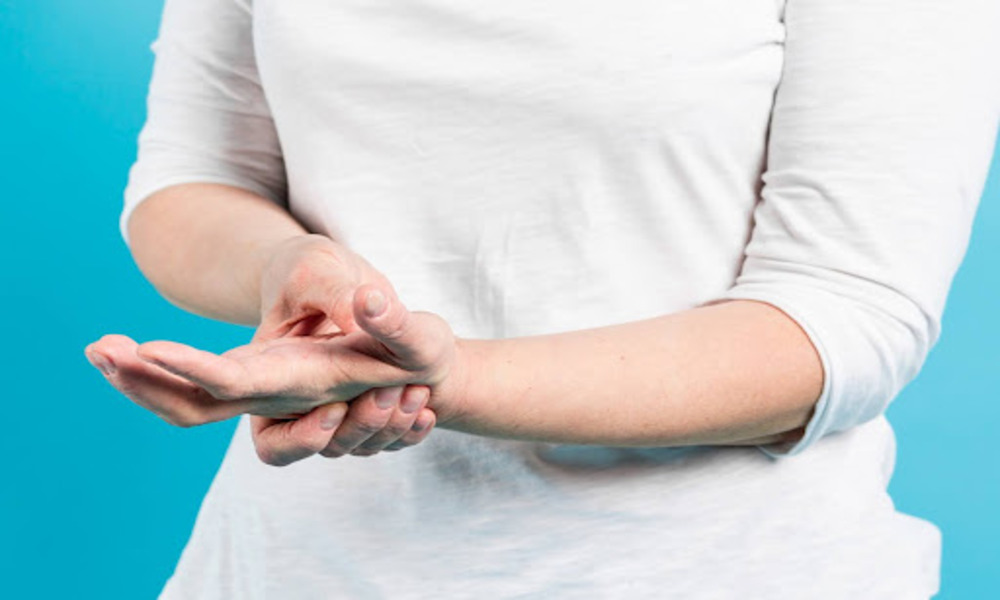
What is Writer’s Cramp?
Writer’s cramp affects people between the ages of 30 and 50. It is more than just hand fatigue after a long writing session, but a neurological movement disorder. It affects coordination and control of finger movements to cause painful cramps or involuntary muscle contractions in the fingers, hand, or forearm, often triggered by writing or other repetitive hand movements.
Types of Writer’s Cramp
In a simple writer’s cramp, patients notice that after writing a few lines, they get so much pain that they have to stop writing. Their fingers grip the pen too tightly, the wrist flexes or extends involuntarily, or the hand begins to tremble, leading to slow, effortful, and sometimes illegible writing.
About half of the people with simple writer’s cramp eventually develop a more severe form, known as dystonic writer’s cramp, under a broader category called task-specific dystonia, where symptoms appear only during certain skilled, repetitive daily activities, tasks like writing, playing a musical instrument, or sewing.
How Writer’s Cramp Progresses
Over time, symptoms may extend beyond writing to other daily activities such as brushing teeth, shaving, buttoning a shirt, using utensils, or eating. In some cases, tremors or dystonic symptoms may spread to the shoulder, opposite hand, or even unrelated muscle groups such as the eyelids or vocal cords. While not usually progressive in a neurological sense, the condition can significantly affect quality of life, especially if the dominant hand is involved.
Diagnosing Writer’s Cramp
Diagnosing writer’s cramp involves a clinical neurological examination, focusing on the nature of the movements, the specific tasks that trigger symptoms, and whether the problem persists at rest. Doctors often observe handwriting and evaluate muscle involvement, ruling out other conditions like carpal tunnel syndrome, arthritis, or tendonitis.
Treatment Options for Writer’s Cramp
Treatment is tailored to each individual, but is mainly confined to occupational therapy to optimize the grip of a pen or pencil by using a thicker pen. Other treatment modalities include Botulinum toxin (Botox) injections, stress management strategies, and surgery. Stress does not cause writer’s cramp but can worsen symptoms, especially in performance-driven environments, such as during exams or musical performances, so in these scenarios, stress management strategies can help alleviate exacerbations. Lastly, surgery, such as deep brain stimulation, is reserved for severe cases of generalized dystonia and is rarely indicated for isolated writer’s cramps.
In recent years, advancements in writer’s cramp treatment have focused on combining neurological care with precision-based therapies. A personalized approach that integrates muscle retraining, targeted interventions, and early diagnosis can significantly improve outcomes, helping patients regain control over fine motor skills with greater confidence and comfort.
Advanced Treatment at Ashirvad
At Ashirvad, we have treated many patients with writer’s cramp successfully. Early diagnosis and a multidisciplinary treatment approach limit the progression of symptoms and restore the ability to write, not just legibly, but comfortably. We have developed a specific treatment called Ultrasound guided dry needling (USGDN) that involves insertion of fine needles into the abnormal agonist and antagonist muscles involved in writing, involved in writer’s cramp. Ultrasonography used during USGDN can visualize the abnormality in these muscles, and the “needle–effect” relaxes the muscle knots or myofascial trigger points in a target-specific manner. The specific advantage of serial USGDN is the release of taut bands and muscle regeneration, which has been reported and confirmed by clinical and USG findings. The relaxation reduces muscle irritability, causing the involuntary muscle contractions to cease. This eliminates the faulty incoordination of the muscles involved in finger movements to restore the normal control of writing. We have also developed Ultra-low-dose Botox injections for overactive muscles causing dystonic movement. This helps to relax the muscles and decrease involuntary movements.
Hope for Patients with Writer’s Cramp
Thus, with consistent management, those affected can resume normal life and continue pursuing their work, hobbies, and everyday tasks without being held back by the frustrating limitations of this condition.
Take the First Step Toward Comfortable Writing
If you or a loved one is experiencing symptoms of writer’s cramp, early intervention can make a significant difference. At Ashirvad, our expert team offers advanced diagnostic tools and personalized treatment plans designed to restore ease and control in everyday movements.
Book a consultation today and explore effective writer’s cramp treatment option and regain confidence in your writing and daily activities.
Frequently Asked Questions
- What causes writer’s cramp?
Writer’s cramp is caused by abnormal functioning in the brain’s motor control areas, leading to involuntary muscle contractions during specific tasks like writing. - Is writer’s cramp permanent?
Not necessarily. With early diagnosis and appropriate treatment, many patients experience significant improvement and symptom control. - Can stress trigger a writer’s cramp?
Stress does not cause the condition but can worsen symptoms, especially during high-pressure activities like exams or performances. - How effective is USGDN treatment?
Ultrasound-guided dry needling (USGDN) has shown promising results in reducing muscle tightness and improving coordination by targeting affected muscles precisely. - When should I consult a specialist?
If you notice persistent hand discomfort, abnormal grip, or difficulty writing that worsens over time, it is advisable to seek expert evaluation as early as possible.