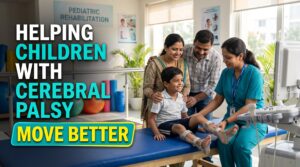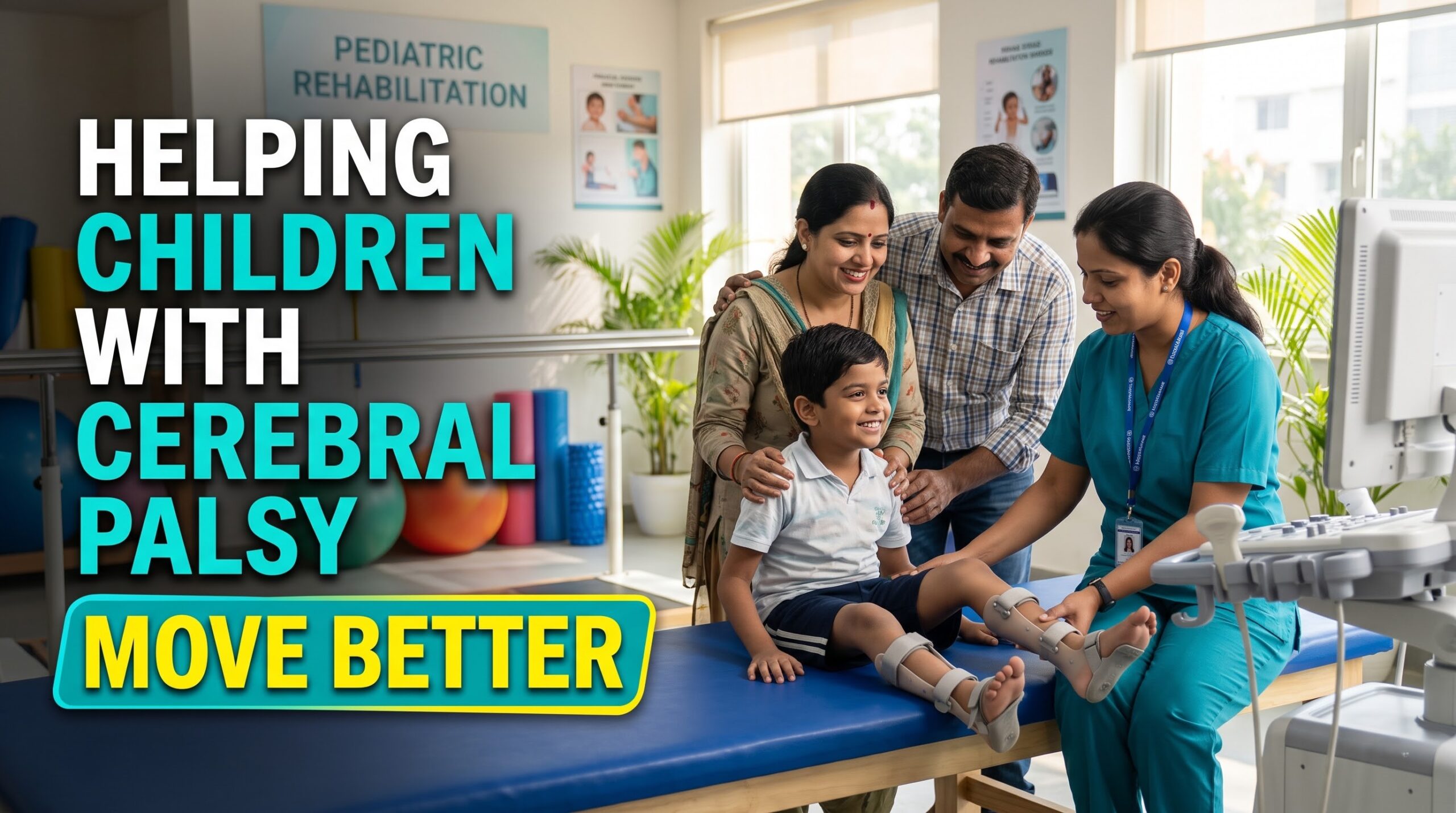
Cerebral palsy(CP) in children has been always considered a neural problem with secondary movement disorders caused by spastic muscles. The neural problem is caused by birth trauma where there is a compromise in the oxygenation oxygen supply to the baby’s brain because of the difficulties in the process of labour or Caesarean section. The treatments for the neural problem have remained in the domain of neurologists and the movement disorders have been considered as a problem to be solved by orthopaedic surgeons. But in the past year, we have been seeing CP children from KEM hospital where I am an honorary consultant pain specialist. With the out of box thought processes at Ashirvad Institute for Pain management and research, we are able to offer alternative treatments for the spastic muscles of cerebral palsy.
These alternate treatments include procedures to address opposing groups of muscles involved in the compromised movements. These procedures include
- Ultrasonography guided dry needling (USGDN) relaxes spastic muscles and concomitantly strengthens them with a micro PRP effect ( Platelet rich plasma effect 0 )
- Ultrasonography guided targeted injection of fascial layers covering the muscles . densification of fasciae which impede muscle movements
- Addressing the muscles themselves with micro doses of Botulinum toxin injections to relax the spastic muscles. We visualize muscles with ultrasonography guidance to address opposing muscle groups in a systematic manner so that the movement limitations of CP are optimally modulated. Conventional doses of Botulinum toxin injections can produce regional weaknesses and inadequacies, while the opposing groups of muscles become more dominant, producing different types of movement in adequacies particularly when injected blindly without sonography guidance where the botox can inadvertently be injected into nearby unaffected muscles. But microdoses under USG guidance avoid this weakening effect.
- Targeted physical therapy to stretch spastic muscles and strengthen the muscles that oppose the spastic muscles.
Combinations of these therapies not only relax spastic muscles but also make the densified fasciae supple. USGDN plays an invaluable role by relaxing spastic muscles and strengthening their anatagonists (opposing group of muscles) to modulate movements.
For example, the scissoring of legs is addressed by relaxing the adductor muscles as well as the hamstring muscles which cause scissoring and simultaneously strengthen outer quadriceps muscles which oppose the scissoring movement so that the scissoring gradually comes down over 4 to 6 sessions of ultrasound guided dry needling.
Do CP children have pain?
Another very important observation is that these children seem to have quite a bit of pain which restricts certain movements by preventing the child from attempting the normal range of movements. This movement avoidance makes the spasticity worse and these become a permanent feature. But when USGDN relaxes these muscles, the pain also goes down and moment restrictions improve significantly.
More importantly, the children seem to be less agitated, happier, communicate more with the family, smile and laugh a lot more. So obviously some distress because of the continuously spastic muscles pulling on the ends does cause pain in these children and when ultrasonography guided dry needing relax the spastic muscles the pain also goes down. Thus USGDN achieves the twin goals of pain relief and spasticity. These are very exciting findings which promise a lot in improving the lot of CP children.
USGDN is a very safe treatment, much less invasive than surgery, which is performed to achieve similar goals. It is a more physiological treatment than Botox, because it simultaneously relaxes as well as strengthens muscles.
To summarize combination of microbotox + USGDN + fascial therapies+ targeted physical and occupational therapy produces significant improvements in children with CP, arthrogryphosis multiplex congenita and other movement disorders by
- Reducing pain
- Reducing spasticity
- Movement modulation and optimization
- Making the operative scars of corrective surgery supple